
July 19, 2026
I Don't Have a Daughter. I Still Think About Which Women My Son Reads About.
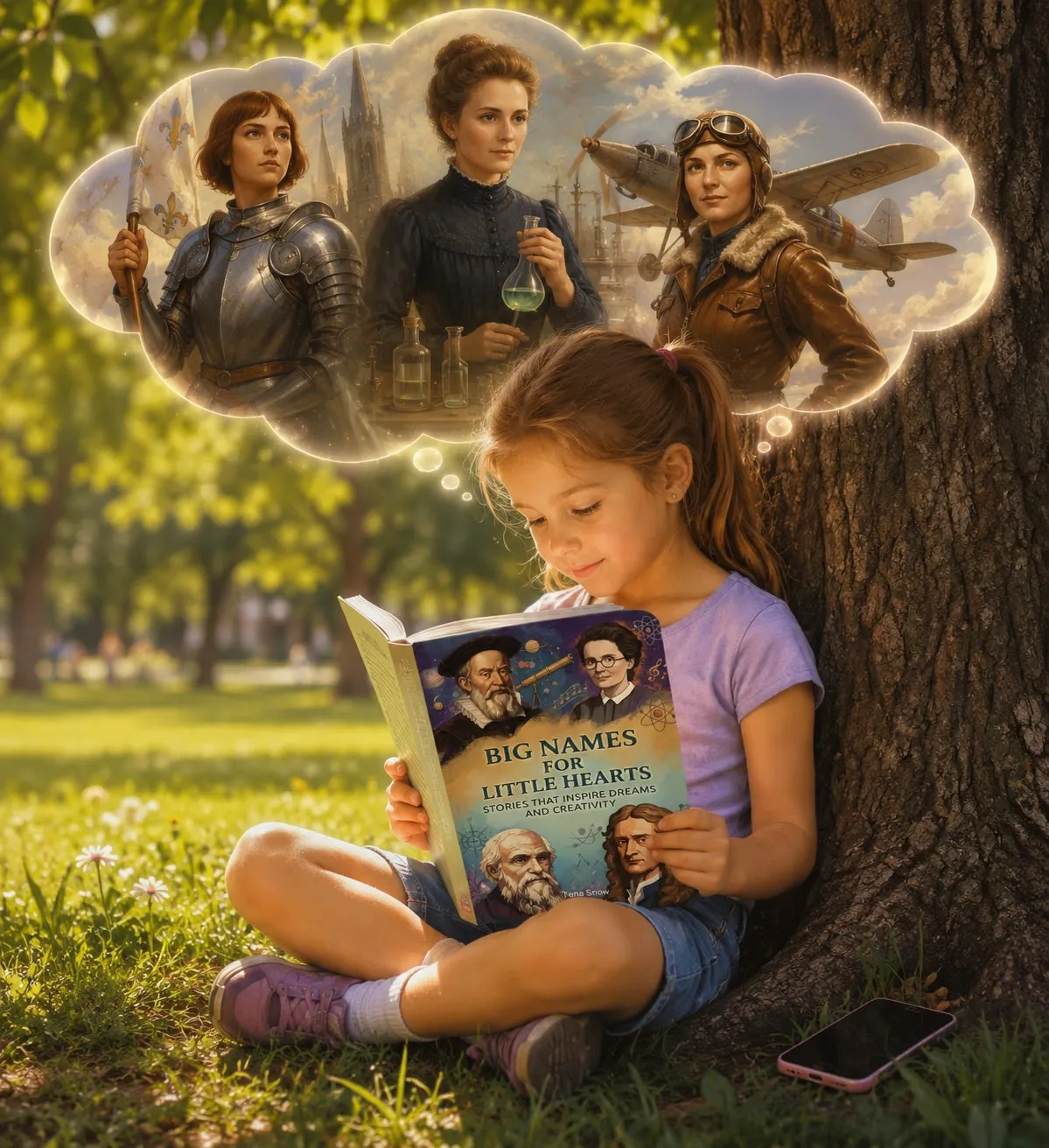
I should say at the start that I have a son, not a daughter. Mothers of girls write about this better than I can, and I read them.
But I’ve spent a lot of time deciding which lives go into books for children, and here’s something that surprised me when I started: the women’s stories were the ones I had to dig for. Not because there weren’t any. Because they’re told less, told shorter, and often told as though the interesting part was that a woman did it at all.
So I go looking. Partly for the girls who’ll read them. Partly because my son is twelve and forming his idea of who does important things, and I’d rather that idea wasn’t accidental.
Two who refused the shape they were handed
Joan of Arc was a teenage farm girl in a country losing a war. No rank, no education, no reason on earth for anyone to listen to her. She walked into a royal court and told a king what to do, and he did it, and she was leading armies at seventeen.
Whatever you make of the visions, the historical fact sits there and doesn’t move: a peasant girl changed the direction of a war because it did not occur to her that her opinion didn’t count.
Marie Curie was refused a university place in Poland because she was a woman, so she attended an illegal underground one that moved between apartments to avoid the authorities. She saved for years, moved to Paris, and was so poor as a student that she fainted from hunger more than once.
She discovered two elements. She won two Nobel Prizes, in two different sciences, which nobody else has ever done. She worked in a converted shed with a leaking roof because no university would give her a proper laboratory, and her notebooks are still radioactive.
Neither of them had permission. Both started anyway.
What children take from it
Not a career plan. Something plainer and more useful.
That being underestimated is a starting condition and not a verdict. That the people who changed things were, almost without exception, not the ones who’d been told they could. That being bad at something at the beginning is simply how everyone begins, including the ones who end up in books.
A girl who hears enough of these stories has something to reach for when someone decides something about her. A boy who hears them grows up without the quiet assumption that the important people were all men, which he will otherwise absorb from roughly everything.
Better than a pep talk
Ten minutes of reading, then one question. Not “what did you learn”, which turns it back into school instantly. Try:
- What would you have said if you were her?
- Who do you think told her she couldn’t?
- Has anybody ever decided something about you before they knew you?
That last one usually gets an answer. Sometimes it takes a while, and the temptation to fill the gap is enormous. Don’t.
Marie Curie is in Big Names for Little Hearts and Joan of Arc in Biographies of Brave Leaders, both illustrated, both for ages 8 to 12.